
Pattern of Activation (Plankton)
WORLD CINEMA PREMIERE
A dataset of deep-sea images comes alive at machine speed.
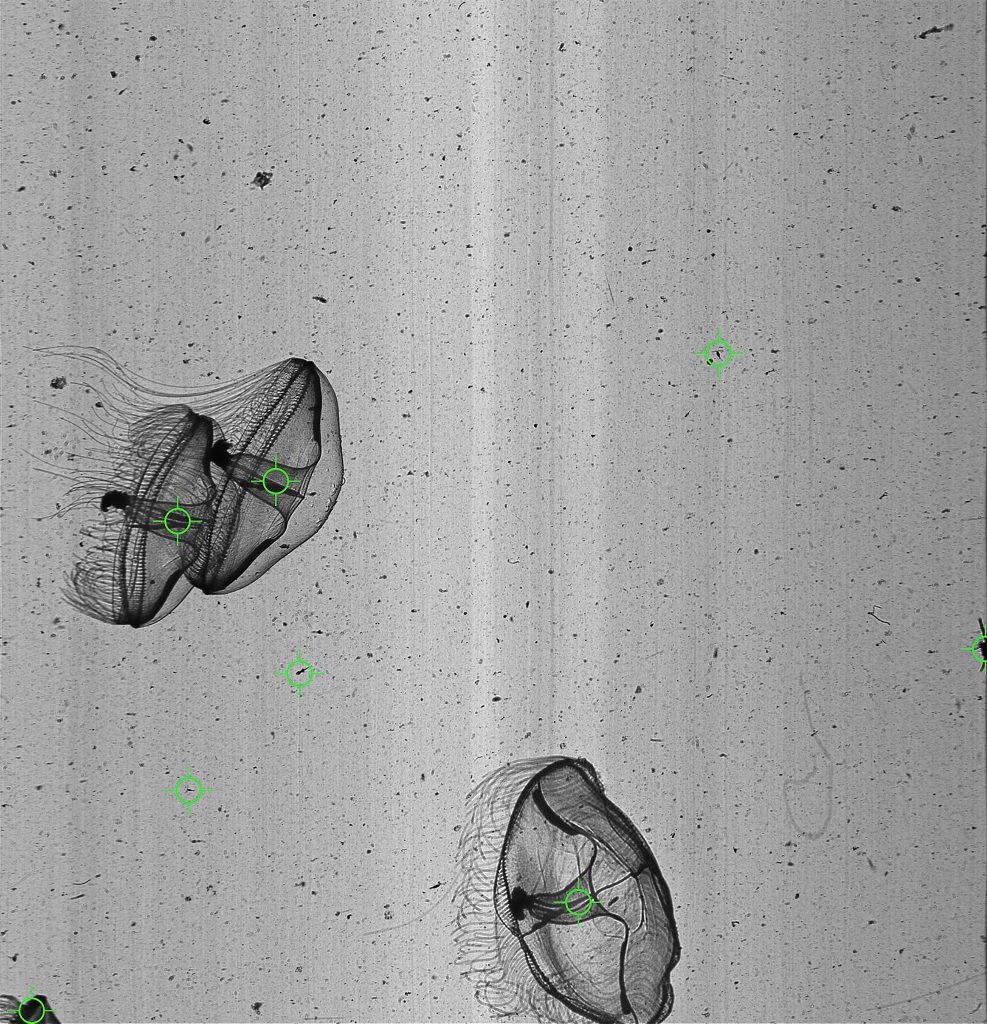
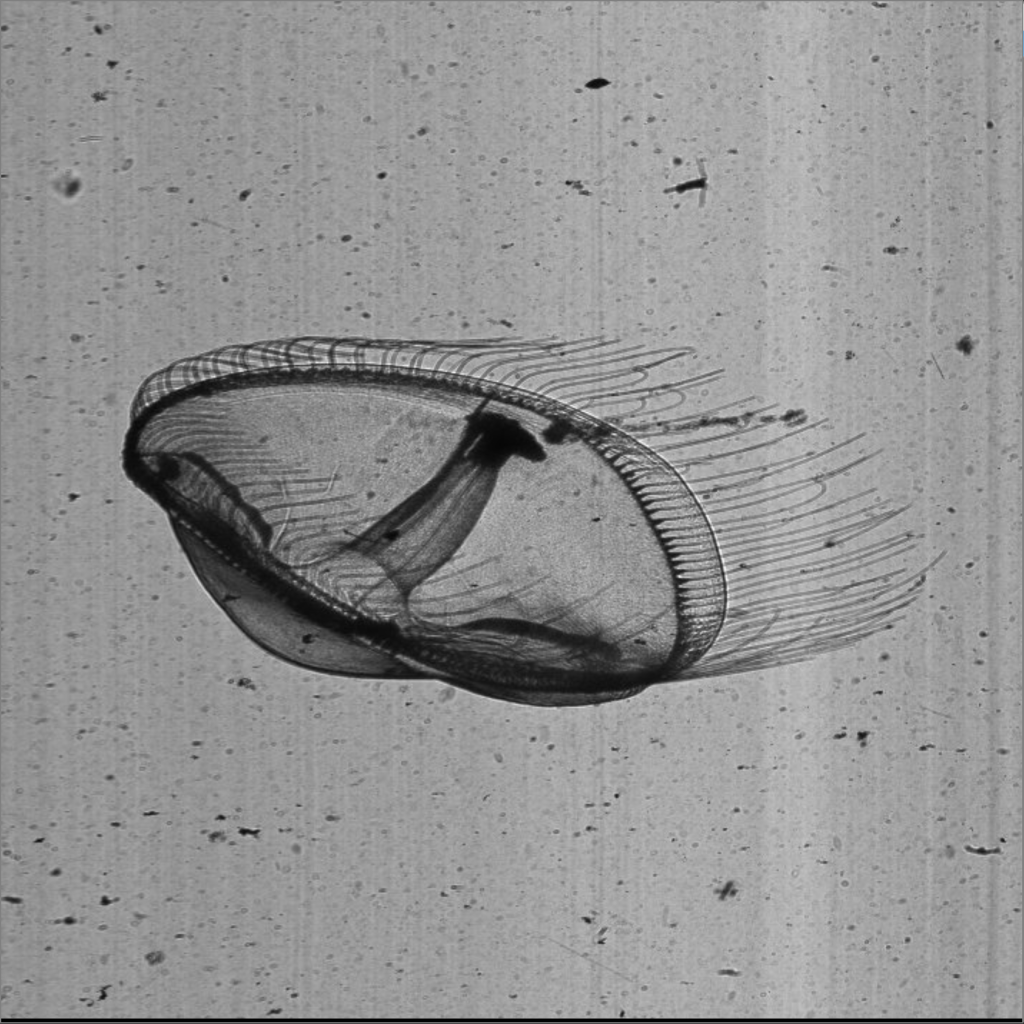
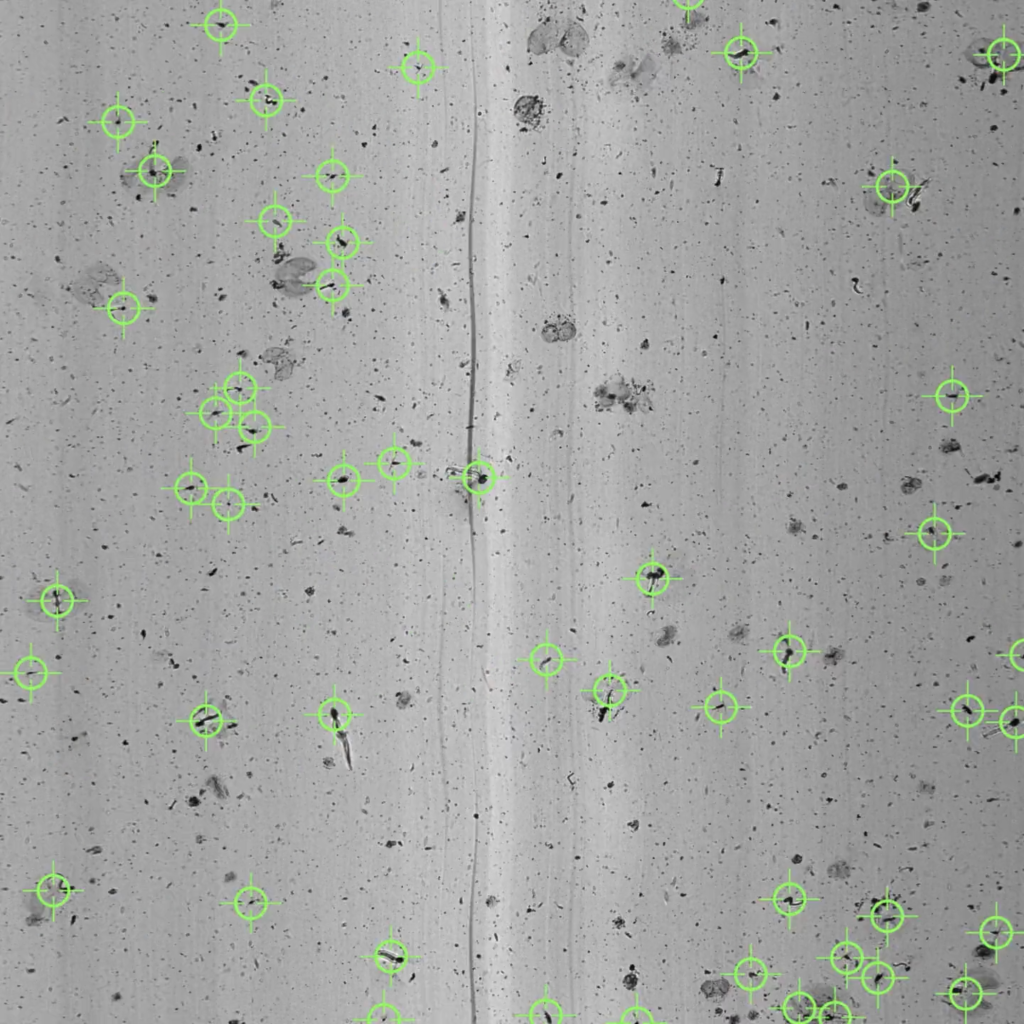
Pattern of Activation (Plankton) is made from images taken by an automatic deep-sea camera for scientific research: thousands of stills of the occasional majestic jellyfish and other sea creatures. What is left unidentified are myriad tiny specks – micro-organisms, debris and microplastics – a portrait of a disturbed ecosystem. Across them lie green target marks: Novitskova’s own annotations, drawn by hand to teach an algorithm to recognise plankton among the ecological noise. She classified thousands of images this way, leaving the labour of looking visible on the image. Animated into movement at 24 frames per second, the specks replicate the look of a dusty film reel, throwing us back to the origins of the moving image as such.
Contains rapidly flashing images. Viewers with photosensitive epilepsy are advised to take care.
SCREENINGS
Saturday 7 November 16:00 (Between Film and Art 2)
Director Katja Novitskova will be present for a Q&A
Programme section(s): Between Film and Art
Original title: Pattern of Activation (Plankton) | Year: 2026 | Runtime: 2′
Country: Estonia, Netherlands | Language: – | Subtitles: English
Director: Katja Novitskova | Production: Katja Novitskova | Editing: Katja Novitskova | Music: Kareem Lotfy, Daniele Guerrinig – Ghost Lemurs
DIRECTOR’S BIO
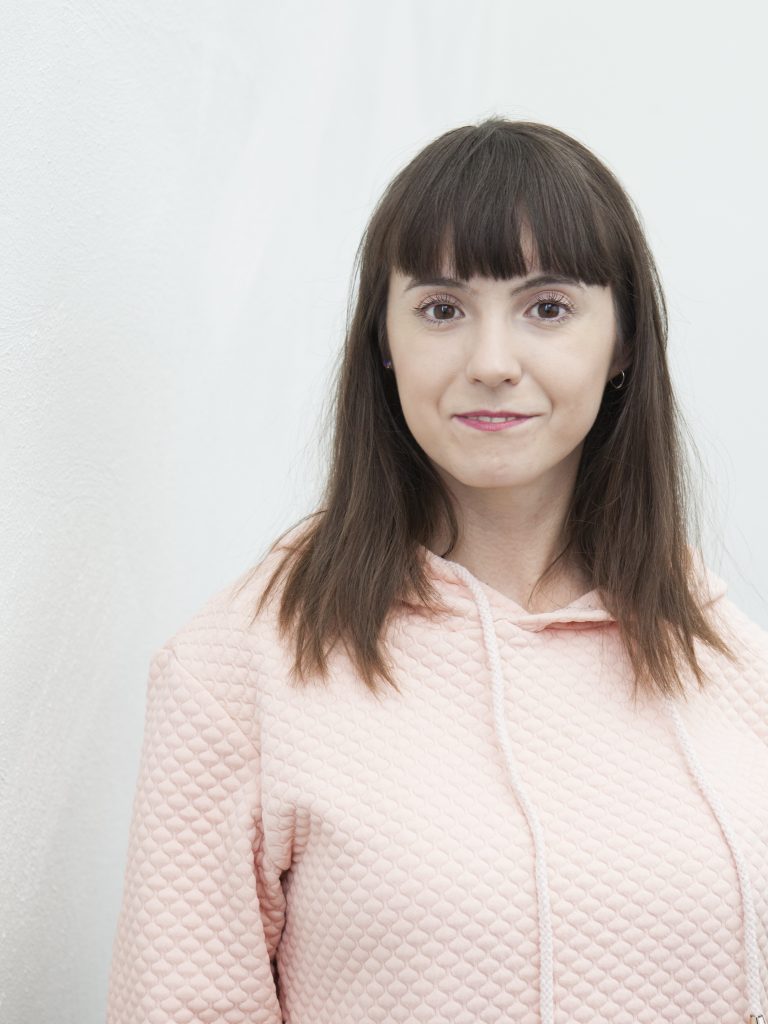
Katja Novitskova (b. 1984, Tallinn; based in Amsterdam) is a visual artist whose work brings art, technology and science together at the level of nature. Tackling the complexity and eventual failures of depicting the world, she draws attention to the tools of mediation and representation – microscopes, brain scans and datasets. Her 2010 artist’s book, Post Internet Survival Guide, proved influential for a whole generation of artists. She was a resident at the Rijksakademie in Amsterdam and represented Estonia at the 57th Venice Biennale in 2017. Her work has since been shown at the Whitechapel Gallery, Hamburger Bahnhof, Stedelijk Museum Amsterdam, MUDAM Luxembourg and Kunstmuseum Den Haag, among others. Only recently, and with real fervour, has she turned to the moving image.