
Best of ENFF: “Blum – Masters of their own destiny” screening | 15.11.2025 at Filmhuis
For those who missed (a part of) our 17th edition of ENFF, we’ve prepared a selection of the films from this year’s programme that sparked most buzz in the audience. One of those making a return to Filmhuis Den Haag is Blum – Masters of their own destiny (Bosnia and Herzegovina, Croatia, Germany), a 2024 feature of a Bosnian Academy Award nominee and Golden Bear winner, Jasmila Žbanić.
To see why this release is maybe what we all need in the current times of capitalist crisis, have a quick read of ENFF’s Agáta Götzová’s review of this perspective-shifting documentary.
But before that – make sure to secure your tickets for the Saturday’s (15th November) screening at 16h at Filmhuis.
“Blum – Masters of Their Own Destiny”, or How to Build an Ethically Successful Corporation
In today’s dominant narrative, we are made to believe that capitalism is the only possible option, that even if it isn’t perfect, it’s the best we’ve got. During the Cold War, we saw two sides of the economic and political spectrum in an ideological conflict. Capitalism in the West and communism in the East. Their binary opposition resembled that of good and evil, offering only one way or the other, with little alternative visions of society. However, some countries and their leaders, including Yugoslavia’s Tito, looked beyond these choices and formed the Non-Aligned Movement. Tito’s Yugoslavia, and its take on communism, form a significant backdrop to the film, prompting us to question whether we should begin breaking the boundaries of our economic and political system that keeps us trapped in a loop of imperfection at best, and mistreatment, discrimination, and exploitation at worst. For those saying it’s too idealistic, Jasmila Žbanić offers Blum – Masters of Their Own Destiny.
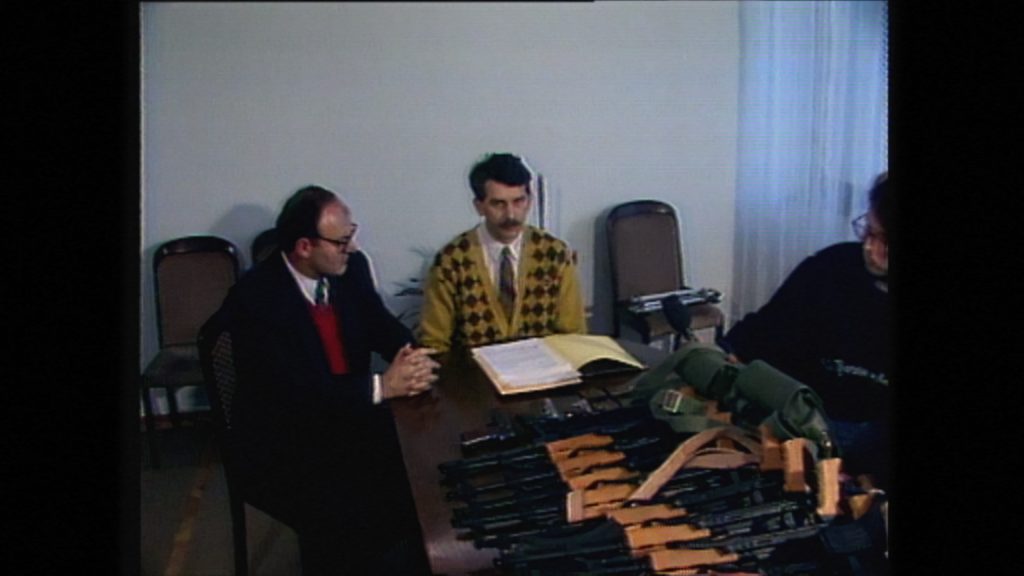
Although ostensibly about the past, Blum begins with an imposing message from the mistreated workers at Amazon who question the morality of the world we live in today: the world of billionaires. Through this lens, we then dive into Žbanić’s collection of archival footage from 1950s Yugoslavia, emerging from war under Tito’s leadership. Žbanić guides us through the life of Emerik Blum, a Bosnian Jewish philanthropist, businessman, and founder of Southeast Europe’s largest conglomerate – Energoinvest. She does this through a mixture of archival footage, contemporary interviews, and sometimes poetic narration, which gives us not only a realistic picture of Blum, but also a deeper look into his values and identity, and how it shaped his company Energoinvest.
Soon after Blum founded Energoinvest, it became one of Yugoslavia’s most successful companies, exporting technology across the world. However, throughout the film, we come to see Energoinvest not only as an industrial giant but as an example of how prosperity and efficiency can complement humanity. Something that we rarely see in our Western capitalist world.
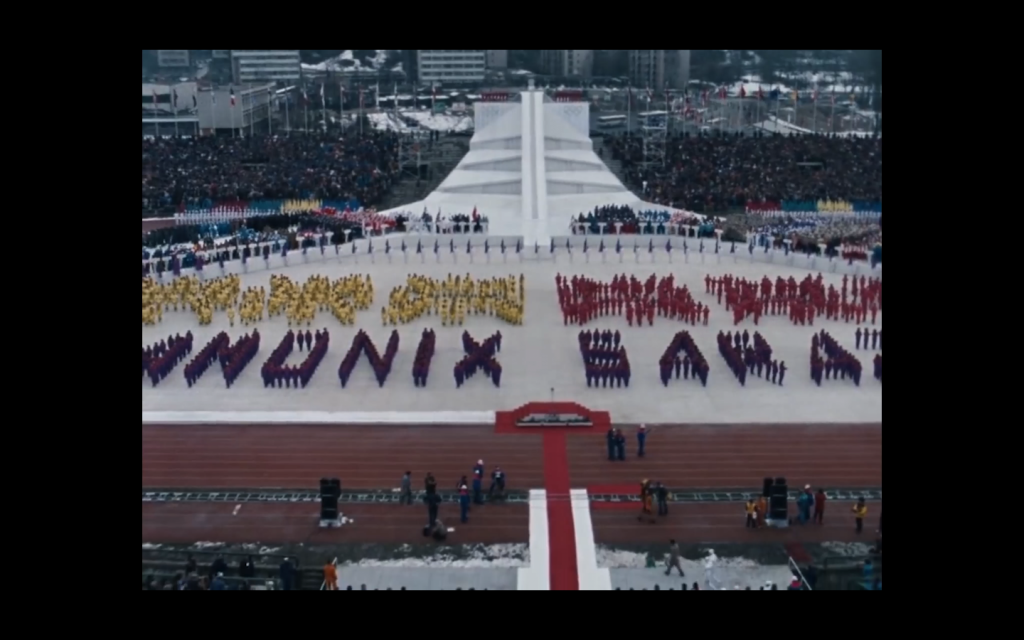
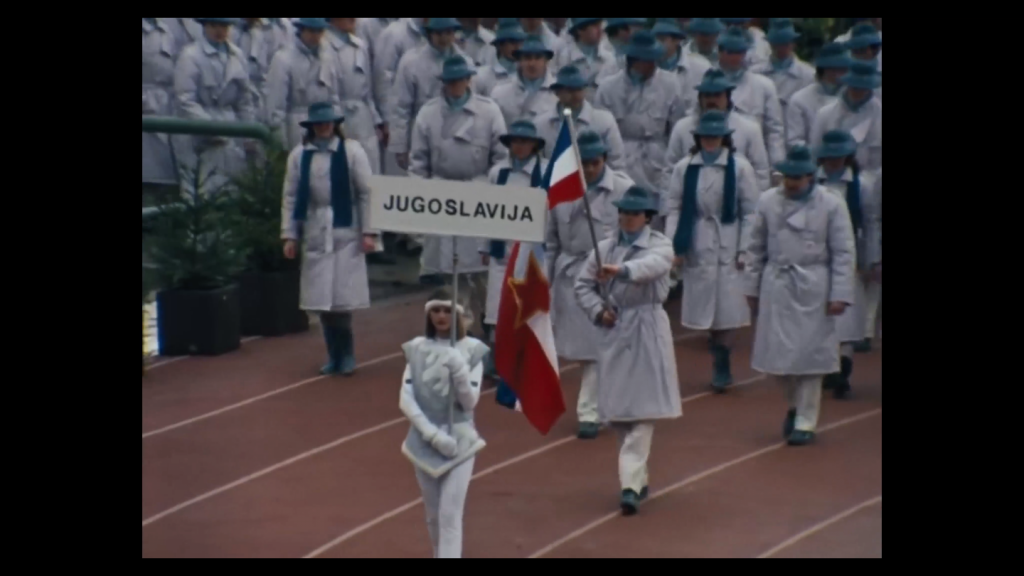
Žbanić doesn’t just show us the history of a company, she tells a story of the people involved, of the workers, whatever their rank, and of the person who began it all – Emerik Blum. Through his daughter’s testimony, we learn that, due to most of his family dying in the Holocaust, Blum possessed a strong belief in equality and shared dignity in the workplace. “This is not my company,” Blum says to the cameraman. His focus was not on the company’s profit, but on the company’s and his own role in society. He believed that everyone needed to have control over their own destiny.
In Blum’s own words, there was no “human hierarchy” in Energoinvest. Through the workers’ testimonies, Žbanić showcases that communication within the company was over four times more interconnected than the average U.S. company at the time. This allowed everyone’s voice to be heard. As we watch footage of the smooth running of Energoinvest, Žbanić interlaces the scenes with Kemal Monteno’s song Energoinvest, complementing the workers’ energy and the company’s productivity with lyrics such as:
U početku smo krotili rijeke, crtali doba koje će doći… gradili smo ljude… svi naši narodi i narodnosti znali su, svima će bolje da bude…
(At the beginning, we tamed the rivers, we drew the age that was yet to come… we were building people…all our nations and nationalities knew, life would be better for everyone…)
Almost in a utopian way, the song’s lyrics and joyful melody represent the workers’ attitudes and wellbeing. Energoinvest guaranteed daily food, a clinic with 160 doctors, and paid vacations. But above all, there was a great sense of camaraderie that extended beyond the workplace. In the scenes that roll with the duration of the song, the Energoinvest worker’s laughter is in stark contrast to the Amazon worker’s voiceovers in the opening scene. There, without any visuals, Žbanić highlights the workers’ voices to raise awareness about their inhumane working conditions. One concludes that “we cannot have a moral society, or a strong economy, when so few have so much and so many have so little.”
This unequal distribution of money dominates the power dynamics of our society today. As Blum believed, “knowledge costs money,” therefore Energoinvest invested heavily in education, offering language courses and scholarships. In this way, the film shakes our perception of a socialist country. As Western viewers, the film opens our eyes to the possibility that a company situated outside a ‘developed’ capitalist sphere could so successfully foster both intellectual and economic growth.
We live in a time where good pay, gender equality, or good communication in giant global corporations are an illusion. If people fight for these rights, they are viewed as “progressive,” and in a way, out of touch and idealistic. Blum: Masters of Their Own Destiny shows us that it doesn’t have to be that way. It is possible to look for alternatives, and if we haven’t started already, Žbanić is offering us the first step in the right direction. I urge everyone to give Emerik Blum a chance, and who knows…he might just win you over, as he did with me.
Words by Agáta Götzová